when deploying servers in singapore, cost control for price-sensitive users is crucial. focusing on the theme of "sharing singapore server service billing model and cost-saving tips for price-sensitive users", this article sorts out common billing models, analyzes the key points of bandwidth and storage billing, and proposes implementable optimization strategies to help you reduce expenses while ensuring business performance.
understanding billing models is the first step to saving money. mainstream models include on-demand billing (billed by the hour or minute), annual subscription (prepaid for long-term use), and spot/preemptible instances (saving but with the risk of interruption). in addition, storage and bandwidth are usually billed separately, and pay-as-you-go or tiered billing is more common. choosing an appropriate model should combine business characteristics and elastic needs.
on-demand billing is flexible and suitable for fluctuating loads, but long-term usage costs are high; annual and monthly subscriptions are suitable for stable long-term loads and can enjoy discounts and guaranteed resources. price-sensitive users need to evaluate business stability, traffic predictability and future growth, and comprehensively select or mix the two models to achieve a balance between cost and flexibility.
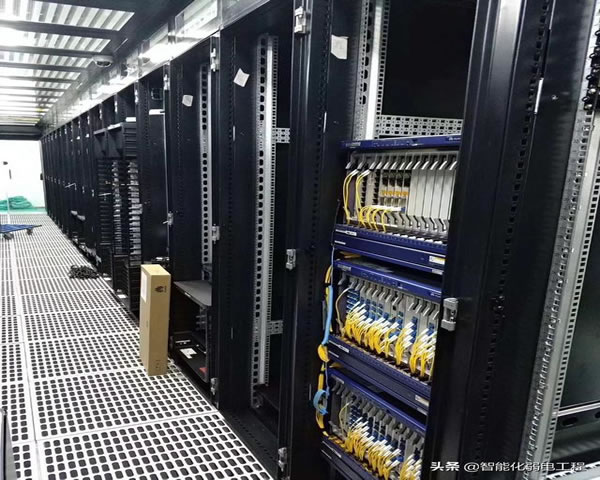
in singapore, bandwidth charges tend to be a significant part of ongoing expenses. by using cdn to distribute static content, enabling compression and caching strategies, optimizing image and video resolutions, and adopting traffic scheduling during peak periods, the demand for host egress bandwidth can be significantly reduced, thereby reducing bandwidth billing pressure.
storage expenses and backup strategies directly impact long-term costs. adopting an archiving or cold storage strategy for infrequently accessed data, setting life cycle rules to automatically migrate old data, and avoiding unnecessary redundant backup frequencies can reduce storage and request costs while ensuring data security.
it is critical to avoid wasting resources when selecting. determine cpu and memory utilization through performance monitoring, and use finer-grained instance specifications or containerized deployment to improve resource density. for short-term peaks, automatic expansion and contraction strategies can be used to maintain smaller instances with baseline load to save long-term costs.
most service providers offer discounts for long-term commitments, but you need to carefully evaluate the commitment period and business change risks. price-sensitive users can first verify their needs with shorter contracts, and then gradually switch to long-term annual subscriptions or reserved instances to obtain discounts and avoid being locked into mismatched configurations for a long time.
implement detailed cost monitoring and set alarms to detect abnormal cost sources in a timely manner. enable tagged bills, subdivide project costs, regularly review expense reports, and combine with cost center allocation to help decision-makers optimize resource allocation and verify the actual effect of savings strategies.
there are compliance and latency requirements to consider when deploying in singapore, which affects region selection and cost. price-sensitive users need to weigh the trade-off between choosing a lower-cost neighboring region and meeting regulatory and performance requirements, and evaluate cross-region transmission costs and potential compliance review expenses.
it is recommended to start from four dimensions: 1) on-demand pilot and gradual reservation; 2) enable cdn and caching to reduce bandwidth; 3) set lifecycle policies to manage storage; 4) use monitoring and tagged billing to achieve refined management. regularly review and adjust strategies, and dynamically optimize based on business rhythm.
the core points of "sharing singapore server service billing model and cost-saving techniques for price-sensitive users" are: clarify business load characteristics, select appropriate billing models, optimize bandwidth and storage, conduct refined monitoring, and use long-term commitments and automated tools to achieve continuous cost reduction. it is recommended to conduct small-scale pilot projects first and establish a cost transparency mechanism, and then gradually promote savings measures to reduce overall expenses in a steady manner.
- Latest articles
- Practical Guide And Advice On Choosing The Most Stable PUBG Server In South Korea
- How Does Cross-border Business Use Cloud Servers? Singapore Servers Improve Access Experience
- How To Enter The Vietnam Server Now? A List Of Graphic Steps And Common Misunderstandings That Even Beginners Can Understand.
- How Does An Enterprise Choose A Hosting Plan That Supports Multiple IPs For US Site Group Servers?
- Looking At The Stability And Compliance Requirements Of Cross-border Transactions From The Futian Hong Kong Station Group Server
- Evaluate The Compliance Certificate And Protection Capabilities Of US Cloud Rental Servers From A Security Perspective
- Purchasing Advice Hong Kong Vps Cloud Server 8 Core How To Choose The Appropriate Package According To Business Load
- Comparative Analysis Of Computer Room Distribution And Network Interconnection Performance Of Server Companies In Taiwan
- Cost Control Billing Model And Money-saving Tips For Taiwan’s Native IP Server Cloud Server
- Cost And Operation And Maintenance Perspective Differences Between Hong Kong Cn2 And BGP Comparison Of Procurement And Maintenance Costs
- Popular tags
-

Recommend Several High-performance Singapore Servers For Your Reference
We recommend several high-performance Singapore servers for your reference to help you choose the right server solution and improve website performance. -

Newbie Setup Tutorial: How To Configure A CN2 Singapore VPS And Troubleshoot Common Issues
A beginner’s deployment guide that teaches you how to configure a CN2 Singapore VPS and address common issues. This article contains practical steps for preparation, initialization, SSH and firewall configuration, network optimization, performance testing, and troubleshooting common issues. -

The Operation And Maintenance Manual Quickly Locates The Server Performance Bottlenecks In Singapore.
this practical manual for operation and maintenance engineers introduces how to quickly locate server performance bottlenecks on singapore nodes, covering baseline collection, hierarchical troubleshooting, network and storage diagnosis, and verification of rollback strategies.